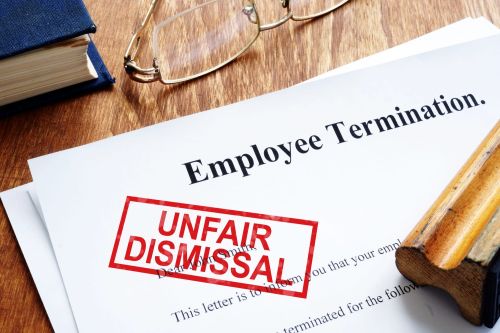
This is the first in a four-part series from Oberman Law Firm addressing employee terminations at businesses. Even in an at-will employment state, letting an employee go carries legal risk if it is not handled correctly. This article explains where that risk comes from and what kinds of claims a wrongfully handled termination can trigger, so you know what you are protecting against before the next three articles walk through prevention, federal compliance, and post-termination protection.
KEY TAKEAWAYS
- At-will employment gives business owners broad discretion — but not unlimited discretion — to terminate staff.
- The most common wrongful termination claims involve discrimination, retaliation, public policy violations, and breach of contract.
- Handbook language can unintentionally create promises that limit your at-will rights if not followed consistently.
- Defamation and wage-and-hour claims are frequently overlooked sources of post-termination liability.
- Even a meritless claim can be costly to defend and disruptive to a small business.
Most U.S. employees are employed “at will,” meaning either party can end the relationship at any time, for almost any reason, or no reason at all. But “almost any reason” is doing a lot of work in that sentence. At-will employment does not protect an employer who fires someone for an illegal reason, and businesses that skip proper process often hand a departing employee exactly the evidence needed to argue that an illegal reason was really behind the decision.
A wrongful termination claim commonly arises from one or more of the following:
- Discrimination claims — firing an employee based on race, sex, pregnancy, age, disability, religion, national origin, or genetic information.
- Retaliation claims — terminating someone shortly after they complained about harassment, discrimination, unpaid wages, or an unsafe working condition, or after they took FMLA leave.
- Public policy violations — firing an at-will employee in a way that violates public policy, such as terminating someone for refusing to perform an illegal act, for reporting a suspected regulatory or safety violation, or for exercising a legal right like jury duty or voting.
- Breach of contract or implied contract — terminating an employee in a way that contradicts specific promises made in an offer letter, employment agreement, or handbook language (for example, a handbook that promises progressive discipline before termination, and then is not followed).
- Defamation — making false or damaging statements about the reason for termination, either internally or to prospective employers, that harm the employee's reputation.
Wage and hour exposure — failing to pay final wages, accrued and unused vacation (where state law requires payout), or overtime owed at the time of separation.
Even a claim that is ultimately unsuccessful can be expensive to defend, disruptive to a small business, and damaging to staff morale and the business's reputation in a close-knit business community. The best protection is not a perfect memory of what happened — it is a documented, consistent process that was followed before the termination ever took place, which is the subject of the next article in this series.
Call to Action: Steps Business Owners Should Take Now
- Conduct a self-audit — List every termination from the past two years and note whether documentation exists to support the stated reason for each.
- Review your written commitments — Confirm any offer letters or handbook language don't unintentionally promise more job security than you intend.
- Talk to your managers — Ask managers whether they know the difference between a lawful, well-documented termination and one that invites a claim.
- Get ahead of your next decision — Before your next termination decision, have counsel review the facts to identify exposure before the decision is final.
How Oberman Law Firm Can Help
- We assess your business's termination history and current policies to identify existing exposure.
- We review specific termination decisions before they happen to flag discrimination, retaliation, or contract risk.
- We represent businesses in responding to EEOC or state agency charges and wrongful termination claims.
- We advise on defamation-safe reference and communication businesses for departing employees.
Next in this series: Proper Steps Before an Employee Is Terminated.
This article is provided for general informational purposes only and does not constitute legal advice. Employment laws vary by state and locality, and the application of any law described here to a specific situation requires individualized legal analysis. Please contact Oberman Law Firm before taking action based on this article.