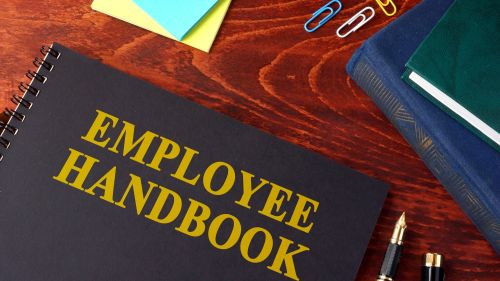
When an employee files a claim, the employee handbook is usually one of the first documents a lawyer asks to see. A current, well-drafted handbook can be your best defense. An outdated one can become the other side's best exhibit. Here is what to review before 2027.
KEY TAKEAWAYS
- Review the handbook every year. Employment laws, payroll rules and workplace technology change faster than most businesses update their policies.
- Policy must match practice. A strong written policy that managers ignore can be worse than none.
- New topics are now standard. Remote work, pregnancy accommodation, AI tools and social media belong in a modern handbook.
- Payroll policies must support new W-2 reporting. Qualified overtime and tips for 2026 must be reported separately in January 2027.
- Get signed acknowledgments for every employee and every new version.
Why the Handbook Matters
In many closely held businesses, the owner is also the HR department. Without clear written policies, disputes over pay, scheduling, leave, discipline and termination become a matter of competing memories — and those cases are expensive to defend. A good handbook sets expectations, supports consistent decisions, and documents that employees were told the rules.
Core Policies Every Handbook Should Include
Employment relationship
- At-will employment statement and a clear disclaimer that the handbook is not a contract.
- Equal employment opportunity statement covering all protected categories under federal and applicable state law.
- Signed acknowledgment page.
Pay and hours
- Timekeeping rules requiring all work time to be recorded, including remote work and after-hours email.
- Meal break rules and a requirement that interrupted breaks be reported and paid.
- Overtime pre-approval procedures that never permit off-the-clock work.
- Bonus and commission terms drafted to work with overtime calculations.
- Tip policies, if applicable, consistent with federal law.
- A process for reporting and correcting paycheck errors.
Leave and accommodation
- Paid time off and sick leave, including whether unused PTO is paid at separation.
- FMLA leave, if you have 50 or more employees.
- Jury duty and military leave consistent with federal and state law.
- Disability accommodation under the ADA and pregnancy accommodation under the Pregnant Workers Fairness Act.
Conduct and safety
- Anti-harassment, anti-discrimination and anti-retaliation policy with more than one reporting channel.
- Progressive discipline and documentation standards.
- Drug and alcohol testing policy.
- Workplace violence prevention and OSHA-related safety rules.
Policies Many Businesses Overlook
- Remote and hybrid work. Eligibility, schedules, equipment, expense reimbursement, timekeeping and data security at home.
- Confidential information and trade secrets. What is confidential, how it must be protected, and what must be returned at separation.
- Social media and public statements. Draft carefully so the policy does not restrict employees' legally protected right to discuss wages and working conditions.
- Artificial intelligence tools. Which AI tools are approved, and a ban on entering confidential, customer or personal information into unapproved tools.
- Company devices and monitoring. Notice that business systems may be monitored, and rules for personal devices used for work.
Updates to Make Before January 1, 2027
- Payroll language. Confirm timekeeping and pay policies support the new IRS requirement to report qualified overtime (Box 12, Code TT) and, where applicable, qualified tips on 2026 W-2s.
- Restrictive covenants. Keep noncompetes out of the handbook and in separate, role-specific agreements, which deserve review given the FTC's targeted enforcement.
- Multi-state employees. Remote employees in other states may be covered by that state's leave, pay and notice laws.
- Manager training. Train every supervisor on harassment complaints, accommodation requests and discipline.
Have Oberman Law Firm Review Your Handbook
Oberman Law Firm drafts and reviews employee handbooks for businesses across industries. We tailor policies to how your company actually operates, so they hold up when you need them.
We can review your existing handbook, update it for 2027, and prepare the acknowledgment forms and manager guidance to go with it.
Schedule your handbook review today. Contact Oberman Law Firm at (770) 886-2400, or visit our office at 327 Dahlonega Street, Suite 401, Cumming, Georgia 30040.
Oberman Law Firm provides this material for informational purposes only. The use of a lawyer is an important decision and should not be based solely upon advertisements.